
Lời phi lộ của người dịch
Trận đại hạn vào thập niên 1930 đã đưa tới một giới nông dân miền trung tây nước Mỹ tay trắng phải chịu nợ ngân hàng. Từ số nợ đó người nông dân Mỹ lâm vào cảnh phá sản do đất đai của họ từng tạo dựng bởi nhiều đời để lại phải mất vào tay ngân hàng. Từ đó họ lại chịu cảnh làm thuê tức biến thân thành "tá điền" ngay trên đất của mình do quyền sở hữu đất đai đó không còn là của họ nữa. Đó là thảm cảnh của nông dân miền trung tây nước Mỹ trong cuộc Khủng Hoảng Kinh Tế 1930
Họ mất đất do bị ngân hàng đuổi ra khỏi nơi chôn nhau cắt rốn và phải tha phương cầu thực ra đi về California kiếm công ăn việc làm
Đó là điểm chính trong cuốn Chùm Nho Phẫn Nộ của John Steinbeck, cuốn tiểu thuyết nổi tiếng vào thập niên 1930
Trong phần dịch này, bạn đọc sẽ thấy giới chủ tức là nhà băng dùng xe máy cày ủi sập nhà cửa của nông dân để bắt buộc họ phải rời bỏ đất đai ra đi ra sao...
Đọc trích dịch này, hi vọng bạn đọc sẽ cảm nhận được nỗi khổ của người dân nghèo khổ ra sao?
Ngay tại một đất nước hàng đầu thế giới như Hoa Kỳ hiện tại; dù sang thế kỷ 21 hơn hai thập niên rồi nhưng lúc nào giới lao động nghèo nàn mạt hạng cũng bị chèn ép và khổ sở. Những đạo luật của nước Mỹ dù là quốc gia văn minh hàng đầu thế giới vẫn luôn luôn làm lợi cho giới giàu có được miễn thuế được ưu tiên mọi thứ nhưng tầng lớp người dân nghèo nước Mỹ dù đông nhất nhưng luôn luôn bị chèn ép, cắt xén mọi phúc lợi và người giàu càng lúc càng giàu thêm và người nghèo càng lúc càng khổ sở thêm
Dù tác phẩm The Grapes of Wrath ra đời vào năm 1939 cách đây hơn tám thập niên rồi nhưng giá trị tác phẩm Chùm Nho Phẫn Nộ của văn hào John E. Steinbeck vẫn còn thấy được rất hiển hiện trong thế kỷ 21 này.
Trân trọng
người dịch
ĐHL


Thế là người đại diện của chủ đất tiếp tục giải thích công việc và tính toán cho những con quái vật, thứ luôn mạnh hơn bọn họ.
Người ta có thể giữ lại đất nếu chỉ có cái ăn và nộp thuế.

-Chúng tôi không thể nào tiếp tục thuê đất được nữa hả các ông ? Có thể năm tới được mùa. Chúa sẽ cho bao nhiêu là bông vào năm tới. Và bao nhiêu cần cho chiến tranh -Chúa biết giá bông lên cao, giá bông sẽ bùng nổ bao nhiêu? bao nhiêu quân phục sẽ cần ? phục vụ đủ cho chiến tranh giá bông chắc sẽ cao đụng tới trần đó các ông . Năm tới, chắc thế.
Nói xong, tá điền ngước lên dò hỏi.

Trong lối vào, mấy mái nhà bị trời hui nóng của số tá điền...vợ con họ cứ thở dài thườn thượt. Mấy đứa trẻ lại ngo ngoe mấy ngón chân. Hai chân chúng thay phiên nhau duỗi ra thế chân kia co lại. Mấy con chó chạy lại ngửi ngửi mùi lạ chiếc xe, xong lần lượt đái vào mấy cái bánh. Có vài con gà mái đang vẫy lông trong lòng cát nóng. Mấy chú lợn thì ủn ỉn như đòi ăn trong mấy cái chuồng nhỏ sát mé sườn đồi đầy đất.
-Các ông muốn chúng tôi làm gì bây giờ ? chúng tôi không thể thuê ít đất hơn. Chúng tôi chết đói một nửa rồi. Mấy đứa con chúng tôi mọi khi đều đói. Chúng tôi đang thiếu áo quần, chúng rách nát tả tơi. Nếu người khác, xóm phường không giống chúng tôi, chắc khi đi họp chúng tôi cũng phải xấu hổ mất.
- Hệ thống cho thuê đất nay xem như chấm dứt. Một người lái xe kéo sẽ tới làm thay cho mười hai hay mười bốn gia đình. Họ có lương và đảm trách vụ mùa. Chúng tôi phải làm vậy thôi. Chúng tôi không muốn vậy, nhưng con 'quái vật' kia đang đau trong người. Con vật kia lại trở chứng gì đó .
-Nhưng những gì sẽ xảy đến cho chúng tôi? Làm sao chúng tôi có ăn đây?
- nhưng đây là đất chúng tôi. Chúng tôi hằng đo đạc phân lô. Chúng tôi sinh ra nơi này, chúng tôi bị giết cũng nơi này và chết đi cũng tại nơi này. Dù mùa màng không ra gì, nhưng nó vẫn là của chúng tôi. Ông biết tại sao là của chúng tôi không ông ? vì chúng tôi cất tiếng khóc chào đời tại nơi này, cật lực làm việc tại nơi này, và nhắm mắt tàn hơi cũng chính nơi này. Chỉ ngần ấy cũng nói lên quyền làm chủ, đáng kể gì những tờ giấy và mấy con số trên kia.


Gã ngồi trên chiếc ghế sắt trông chẳng giống người. Găng tay, đeo kiếng, mặt nạ cao su che kín mũi, miệng- chẳng khác gì là một phần con quái vật máy cày kia. Hắn giờ là một con robot nhúc nhích trên chiếc ghế. Tiếng động cơ ầm ầm trong ống xi lanh, âm vang khắp cánh đồng; tiếng ồn duy nhất cộng hưởng cùng không khí và đất để cùng nhau làm nên một nhịp điệu ăn ý, hòa đồng.

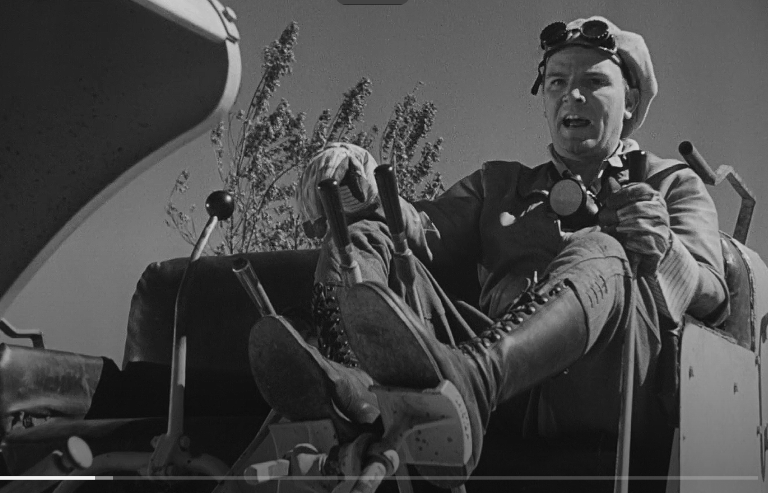


Gã lái xe ngồi trong ghế sắt. Hắn tự hào về những đường cày thẳng tắp mà hắn chẳng chủ định, hãnh diện về chiếc máy cày, gã không làm chủ mà cũng chẳng yêu thương gì. Tự hào về một sức mạnh mà hắn không thể chỉ huy. Khi mùa màng phát triển hay lúc thu hoạch, giờ không còn là chuyện của người dùng tay bóp tơi những hòn đất nóng bỏng ra, chảy qua đầu từng ngón tay, không còn chuyện cần người đụng tay vào hạt giống cùng thèm khát hình ảnh hạt nẩy mầm. Hạng người này ăn những gì không do bàn tay trồng ra, không dính dáng gì đến bánh mỳ. Những lưỡi sắt đào đất lên, đất sẽ chết dần mòn dưới lưỡi sắt này; vì nó không đúc ra từ yêu thương, thù hận, chẳng do cầu nguyện hay rủa nguyền.

-Tại sao lại là mầy? mầy là con của Joe Davis đây mà ?
-Đúng- gã lái máy cày trả lời cụt ngủn.
-À té ra là mầy, mầy đang làm cái quái gì ở đây? mầy hại cả bà con lối xóm của mầy mà vẫn cứ làm ?
-Tôi có Ba đô la một ngày đây nghe! giờ đây tôi 'đếch' phải cúi luồn để kiếm bữa cơm-nhưng cuối cùng chẳng có chút gì bỏ bụng. Tôi có vợ và con. Chúng tôi cần phải ăn,. Ba đô la một ngày , mà ngày nào cũng lãnh được như vậy.
-đúng
- Nhưng ba đô la một ngày mà để mười lăm tới hai mươi gia đình bà con ở đây hoàn toàn không có gì ăn. Gần cả trăm mạng người ta phải bị đuổi ra khỏi nơi này rồi lang thang dọc đường vì ba đô la của mầy, thử xem có hợp lý không hử ?
Gã lái máy cày vẫn giữ ý định
-Tại sao ông không nghĩ ra? hãy nghĩ lại bầy con tôi. Lương ba đô la một ngày, và ngày nào cũng có. Thời thế luôn thay đổi, phải không thưa Ông, Ông không biết à ? Không thể tạo được cuộc sống trừ phi quý vị có hai, năm, mười mẫu đất cùng sở hữu luôn một chiếc máy cày. Đất đai mùa màng không còn dành cho những người nghèo khổ như chúng ta đây nữa rồi. Các ông, đừng la lối than phiền vì các ông không thể mua nỗi những chiếc xe Ford, vì các ông không là khách hàng của hãng điện thoại. Ô, mùa màng bây giờ , các người thấy đó. Chẳng cần nhọc sức hay làm nhiều. Bà con hãy gắng rời đi nơi nào đó còn có cơ may kiếm được ba đồng một ngày. Đây là lối thoát duy nhất mà thôi.
Tá điền ngẫm nghĩ :
-Thật là buồn cười . Nếu con người có một tí đất đai, thì đất đai đó là chính họ, một phần của con người họ, giống y họ. Nếu người này làm chủ hoàn toàn miếng đất nơi họ có thể đi lại trên đó, vừa có thể chăm sóc nó, buồn khi mùa màng không tốt, vui khi trời mưa tràn trề, vì miếng đất này là của họ, người này có thể trưởng thành thêm khi làm chủ nó. Dù chưa thành công, anh vẫn lớn lên với đất đai của mình. Điều này nghĩ ra cũng đúng.
Rồi ông ta lại suy nghĩ mông lung:
-Nhưng hãy để người đó sở hữu một tài sản mà y không thấy được, hay chẳng có thời gian tới sờ soạn với nó, hay không bao giờ có thì giờ tới được đó để đi xem xét -Tại sao thế ? Vì tài sản này là con người. Người này không được làm điều hắn ta nghĩ, y không đươc làm, không thể nghĩ điều y muốn. Tài sản giờ đây là con người, mạnh hơn chính bản thân của người đó. Và y trở thành nhỏ bé , không bao giờ lớn được . Chỉ có chủ của y là lớn thôi-rồi y, người đầy tớ trong tài sản đó. Điều này lại đúng, nữa.

Gã lái xe cày nhai miếng bánh mứt có nhãn hiệu và vứt lớp vỏ ngoài ra xa.
- Thời thế thay đổi lắm rồi, mấy người không biết sao ? Hãy nghĩ vấn đề khi mấy người không nuôi con nỗi. Hãy đi kiếm ba đô la một ngày đi mà nuôi bầy nhỏ. Các người đừng lên tiếng lo giúp cho con người khác mà hãy lo cho con mình trước đã. Mấy ông được người ta khen cho vài tiếng khi lên tiếng giúp, nhưng làm sao bằng có được ba đô la một ngày ? Nhà giàu (big shots) sẽ không trả cho các ông ba đô la một ngày nếu cứ lo tào lao mọi thứ như thế, trừ cái chuyện các ông lo làm sao để có ba đô la một ngày cho chính các ông đó thôi.
-Gần cả trăm người bị tống ra đường vì ba đô la của mày. Chúng tao sẽ đi đâu đây?
-Ngang đây tôi nhớ lại việc của tôi

Gã lái xe lạnh lùng:
-Tốt hơn hết mấy người đi ngay lập tức, tôi sẽ cày sân mấy người sau bữa ăn tối nay.
-Mày đã lấp giếng sáng nay rồi.
-tôi biết. Đường xe tôi phải chạy thẳng. Tôi sẽ cày luôn sân mấy người chiều tối nay. Xe tôi phải cày theo đường thẳng. Ông cũng biết Joe Davis à ? Ông già tôi đó, nhờ vậy tôi mới nói cho mấy người biết chuyện đó.Tôi được lệnh như vậy bất cứ ở đâu có một gia đình không chịu dời đi-cứ làm ra vẻ bất ngờ- cho xe liếm sát vào nhà đó làm thủng môt lỗ-tốt, tôi sẽ được trả gấp đôi. Nên nhớ con út tôi chưa bao giờ mua được giày cả !
-Tao xây dựng nơi này từ đôi bàn tay tao. Uốn thẳng bao cái đinh cũ để sơn lại. Tốn bao nhiêu bó dây để dựng nên nhà cửa rui mèn. Nơi này thuộc về tao. Nó là của tao. Tao tạo dựng nó. Mầy cứ cày sập nó đi- tao núp trong cửa số với khẩu súng . Tao bắn mày như bắn con thỏ cho xem.
-Không phải tôi muốn vậy. Tôi không có quyền làm gì. Tôi sẽ mất việc nếu tôi không cày tiếp. Nhìn này-giả thử ông giết tôi ? Họ sẽ treo cổ ông, nhưng trong khi ông chờ treo cổ , thằng lái xe cày khác cũng cày sập nhà ông thôi. Ông chớ nên giết một người làm đúng đó nghe.
-Vậy sao ?
-Ông sai rồi. Người đó nhận lệnh từ ngân hàng. NGân hàng ra lệnh cho người đó:
-Hãy đuổi hết bọn họ ra khỏi nơi này và đây là việc của anh .
-À, đương nhiên phải có chủ tịch ngân hàng. Có cả toán giám đốc. Tao sẽ dồn đủ một kho súng và tìm bọn trong nhà băng.
Gã lái xe cày giờ mới tiếp:
-Người ta cho biết ngân hàng lại nhận lệnh từ Miền Đông . Và cái lệnh nó như vầy 'Phải làm vùng đất này sinh ra lợi tức còn không chúng tôi sẽ đóng cửa nhà băng nơi này'
-Thế thì hệ thống này lên tận đâu? Tao sẽ bắn ai đây ? Tao không bao giờ ngồi chờ chết đói trước khi tao giết thằng đã làm chết đói chúng tao .
-Tôi không biết. Có thể các người không có ai để bắn đâu. Có thể cái ông tìm bắn không phải là người. Có thể, giống như các người nói, tài sản làm ra chuyện này. Dù sao tôi đã kể cho ông nghe cái lệnh đó rồi.
-Để tao xem đã ?
-Chúng tao phải xem lại có cách gì ngưng việc này không ?Đây không phải là sấm sét và động đất. Con người làm nhiều điều xấu xa và nhờ Chúa con người có thể thay đổi được.

Tá điền ngồi ngay trên lối vào, gã lái xe rù máy lái chiếc xe cày rời đi, những đường đất vồng lên rơi xuống, bừa chải đất từ phía sau, mấy cái ông bỏ hột trượt trên mặt đất. Ngang qua đằng trước sân những đường cày đã thành hình cùng nền đất cứng cánh đồng nay đã bỏ giống, chiếc máy cày đi thêm vòng khác chỉ còn mười bộ chưa cày. Con thú sắt tiếp tục chạy lui, cái là chắn sắt ở trước liếm vào góc nhà, làm đổ sập bức vách, giật nát căn nhà nhỏ đổ ngang, sụm xuống , bị nát như con bọ dưới chân. Gã lại mang kiếng , đeo mặt nạ che mũi miệng. Chiếc xe tiếp tục cày theo một đường thẳng tắp, không khí cùng nền đất như rung rinh theo tiếng gầm thét của động cơ. Người tá điền đứng yên căng mắt nhìn theo, khẩu súng trường lăm lăm trong tay. Người vợ đứng cạnh bên, lũ con đứng đằng sau, im thin thít. Tất cả đều trố mắt nhìn theo chiếc xe máy cày./.
In the open doors the women stood looking out, and behind them the children—corn-headed children, with wide eyes, one bare foot on top of the other bare foot, and the toes working. The women and the children watched their men talking to the owner men. They were silent.
Some of the owner men were kind because they hated what they had to do, and some of them were angry because they hated to be cruel, and some of them were cold because they had long ago found that one could not be an owner unless one were cold. And all of them were caught in something larger than themselves. Some of them hated the mathematics that drove them, and some were afraid, and some worshiped the mathematics because it provided a refuge from thought and from feeling. If a bank or a finance company owned the land, the owner man said, The Bank—or the Company—needs—wants—insists—must have—as though the Bank or the Company were a monster, with thought and feeling, which had ensnared them. These last would take no responsibility for the banks or the companies because they were men and slaves, while the banks were machines and masters all at the same time. Some of the owner men were a little proud to be slaves to such cold and powerful masters. The owner men sat in the cars and explained. You know the land is poor. You’ve scrabbled at it long enough, God knows.
The squatting tenant men nodded and wondered and drew figures in the dust, and yes, they knew, God knows. If the dust only wouldn’t fly. If the top would only stay on the soil, it might not be so bad.
The owner men went on leading to their point: You know the land’s getting poorer. You know what cotton does to the land; robs it, sucks all the blood out of it.
The squatters nodded—they knew, God knew. If they could only rotate the crops they might pump blood back into the land.
Well, it’s too late. And the owner men explained the workings and the thinkings of the monster that was stronger than they were. A man can hold land if he can just eat and pay taxes; he can do that.
Yes, he can do that until his crops fail one day and he has to borrow money from the bank. But—you see, a bank or a company can’t do that, because those creatures don’t breathe air, don’t eat side-meat. They breathe profits; they eat the interest on money. If they don’t get it, they die the way you die without air, without side-meat. It is a sad thing, but it is so. It is just so.
The squatting men raised their eyes to understand. Can’t we just hang on? Maybe the next year will be a good year. God knows how much cotton next year. And with all the wars—God knows what price cotton will bring. Don’t they make explosives out of cotton? And uniforms? Get enough wars and cotton’ll hit the ceiling. Next year, maybe. They looked up questioningly.
We can’t depend on it. The bank—the monster has to have profits all the time. It can’t wait. It’ll die. No, taxes go on. When the monster stops growing, it dies. It can’t stay one size.
Soft fingers began to tap the sill of the car window, and hard fingers tightened on the restless drawing sticks. In the doorways of the sun-beaten tenant houses, women sighed and then shifted feet so that the one that had been down was now on top, and the toes working. Dogs came sniffing near the owner cars and wetted on all four tires one after another. And chickens lay in the sunny dust and fluffed their feathers to get the cleansing dust down to the skin. In the little sties the pigs grunted inquiringly over the muddy remnants of the slops.
The squatting men looked down again. What do you want us to do? We can’t take less share of the crop—we’re half starved now. The kids are hungry all the time. We got no clothes, torn an’ ragged. If all the neighbors weren’t the same, we’d be ashamed to go to meeting.
And at last the owner men came to the point. The tenant system won’t work any more. One man on a tractor can take the place of twelve or fourteen families. Pay him a wage and take all the crop. We have to do it. We don’t like to do it. But the monster’s sick. Something’s happened to the monster.
We know. We’ve got to take cotton quick before the land dies. Then we’ll sell the land. Lots of families in the East would like to own a piece of land.
The tenant men looked up alarmed. But what’ll happen to us? How’ll we eat?
You’ll have to get off the land. The plows’ll go through the dooryard.
And now the squatting men stood up angrily. Grampa took up the land, and he had to kill the Indians and drive them away. And Pa was born here, and he killed weeds and snakes. Then a bad year came and he had to borrow a little money. An’ we was born here. There in the door our children born here. And Pa had to borrow money. The bank
owned the land then, but we stayed and we got a little bit of what we raised.
We know that—all that. It’s not us, it’s the bank
. A bank isn’t like a man. Or an owner with fifty thousand acres, he isn’t like a man either. That’s the monster.
Sure, cried the tenant men, but it’s our land. We measured it and broke it up. We were born on it, and we got killed on it, died on it. Even if it’s no good, it’s still ours. That’s what makes it ours—being born on it, working it, dying on it. That makes ownership, not a paper with numbers on it.
We’re sorry. It’s not us. It’s the monster. The bank
isn’t like a man.
Yes, but the bank
is only made of men.
is something else than men. It happens that every man in a bank hates what the bank does, and yet the bank does it. The bank is something more than men, I tell you. It’s the monster. Men made it, but they can’t control it.
The tenants cried, Grampa killed Indians, Pa killed snakes for the land. Maybe we can kill banks—they’re worse than Indians and snakes. Maybe we got to fight to keep our land, like Pa and Grampa did.
And now the owner men grew angry. You’ll have to go. But it’s ours, the tenant men cried. WeNo. The bank
, the monster owns it. You’ll have to go. We’ll get our guns, like Grampa when the Indians came. What then? Well—first the sheriff, and then the troops. You’ll be stealing if you try to stay, you’ll be murderers if you kill to stay. The monster isn’t men, but it can make men do what it wants. But if we go, where’ll we go? How’ll we go? We got no money. We’re sorry, said the owner men. The bank, the fifty-thousand-acre owner can’t be responsible. You’re on land that isn’t yours. Once over the line maybe you can pick cotton in the fall. Maybe you can go on relief. Why don’t you go on west to California? There’s work there, and it never gets cold. Why, you can reach out anywhere and pick an orange. Why, there’s always some kind of crop to work in. Why don’t you go there? And the owner men started their cars and rolled away.
The tenant men squatted down on their hams again to mark the dust with a stick, to figure, to wonder. Their sunburned faces were dark, and their sun-whipped eyes were light. The women moved cautiously out of the doorways toward their men, and the children crept behind the women, cautiously, ready to run. The bigger boys squatted beside their fathers, because that made them men. After a time the women asked, What did he want?
And the men looked up for a second, and the smolder of pain was in their eyes. We got to get off. A tractor and a superintendent. Like factories.
Where’ll we go? the women asked.
We don’t know. We don’t know.
And the women went quickly, quietly back into the houses and herded the children ahead of them. They knew that a man so hurt and so perplexed may turn in anger, even on people he loves. They left the men alone to figure and to wonder in the dust.
After a time perhaps the tenant man looked about—at the pump put in ten years ago, with a goose-neck handle and iron flowers
on the spout, at the chopping block where a thousand chickens had been killed, at the hand plow lying in the shed, and the patent crib hanging in the rafters over it.
The children crowded about the women in the houses. What we going to do, Ma? Where we going to go?
THE TRACTORS came over the roads and into the fields, great crawlers moving like insects, having the incredible strength of insects. They crawled over the ground, laying the track and rolling on it and picking it up. Diesel tractors, puttering while they stood idle; they thundered when they moved, and then settled down to a droning roar. Snubnosed monsters, raising the dust and sticking their snouts into it, straight down the country, across the country, through fences, through dooryards, in and out of gullies in straight lines. They did not run on the ground, but on their own roadbeds. They ignored hills and gulches, water courses
, fences, houses.
The man sitting in the iron seat did not look like a man; gloved, goggled, rubber dust mask over nose and mouth, he was a part of the monster, a robot in the seat. The thunder of the cylinders sounded through the country, became one with the air and the earth, so that earth and air muttered in sympathetic vibration. The driver could not control it—straight across country it went, cutting through a dozen farms and straight back. A twitch at the controls could swerve the cat’, but the driver’s hands could not twitch because the monster that built the tractors, the monster that sent the tractor out, had somehow got into the driver’s hands, into his brain and muscle, had goggled him and muzzled him—goggled his mind, muzzled his speech, goggled his perception, muzzled his protest. He could not see the land as it was, he could not smell the land as it smelled; his feet did not stamp the clods or feel the warmth and power
of the earth. He sat in an iron seat and stepped on iron pedals. He could not cheer or beat or curse or encourage the extension of his power, and because of this he could not cheer or whip or curse or encourage himself. He did not know or own or trust or beseech the land. If a seed dropped did not germinate, it was nothing. If the young thrusting plant withered in drought or drowned in a flood of rain, it was no more to the driver than to the tractor.
He loved the land no more than the bank
loved the land. He could admire the tractor—its machined surfaces, its surge of power, the roar of its detonating cylinders; but it was not his tractor. Behind the tractor rolled the shining disks, cutting the earth with blades not plowing but surgery, pushing the cut earth to the right where the second row of disks cut it and pushed it to the left; slicing blades shining, polished by the cut earth. And pulled behind the disks, the harrows combing with iron teeth so that the little clods broke up and the earth lay smooth. Behind the harrows, the long seeders—twelve curved iron penes erected in the foundry, orgasms set by gears, raping methodically, raping without passion. The driver sat in his iron seat and he was proud of the straight lines he did not will, proud of the tractor he did not own or love, proud of the power he could not control. And when that crop grew, and was harvested, no man had crumbled a hot clod in his fingers and let the earth sift past his fingertips. No man had touched the seed, or lusted for the growth. Men ate what they had not raised, had no connection with the bread. The land bore under iron, and under iron gradually died; for it was not loved or hated, it had no prayers or curses.
At noon the tractor driver stopped sometimes near a tenant house and opened his lunch: sandwiches wrapped in waxed paper, white bread, pickle, cheese, Spam, a piece of pie branded like an engine part. He ate without relish. And tenants not yet moved away came out to see him, looked curiously while the goggles were taken off, and the rubber dust mask, leaving white circles around the eyes and a large white circle around nose and mouth. The exhaust of the tractor puttered on, for fuel is so cheap it is more efficient to leave the engine running than to heat the Diesel nose for a new start
. Curious children crowded close, ragged children who ate their fried dough as they watched. They watched hungrily the unwrapping of the sandwiches, and their hunger-sharpened noses smelled the pickle, cheese, and Spam. They didn’t speak to the driver. They watched his hand as it carried food to his mouth. They did not watch him chewing; their eyes followed the hand that held the sandwich. After a while the tenant who could not leave the place came out and squatted in the shade beside the tractor.
“Why, you’re Joe Davis’s boy!”
“Sure,” the driver said.
“Well, what you doing this kind of work for—against your own people?”
“Three dollars a day. I got damn sick of creeping for my dinner—and not getting it. I got a wife and kids. We got to eat. Three dollars a day, and it comes every day.”
“That’s right,” the tenant said. “But for your three dollars a day fifteen or twenty families can’t eat at all. Nearly a hundred people have to go out and wander on the roads for your three dollars a day. Is that right?”
And the driver said, “Can’t think of that. Got to think of my own kids. Three dollars a day, and it comes every day. Times are changing, mister, don’t you know? Can’t make a living on the land unless you’ve got two, five, ten thousand acres and a tractor. Crop land isn’t for little guys like us any more. You don’t kick up a howl because you can’t make Fords, or because you’re not the telephone company. Well, crops are like that now. Nothing to do about it. You try to get three dollars a day someplace. That’s the only way.”
The tenant pondered. “Funny thing how it is. If a man owns a little property, that property is him, it’s part of him, and it’s like him. If he owns property only so he can walk on it and handle it and be sad when it isn’t doing well, and feel fine when the rain falls on it, that property is him, and some way he’s bigger because he owns it. Even if he isn’t successful he’s big with his property. That is so.”
And the tenant pondered more. “But let a man get property he doesn’t see, or can’t take time to get his fingers in, or can’t be there to walk on it—why, then the property is the man. He can’t do what he wants, he can’t think what he wants. The property is the man, stronger than he is. And he is small, not big. Only his possessions are big and he’s the servant of his property. That is so, too.”
The driver munched the branded pie and threw the crust away. “Times are changed, don’t you know? Thinking about stuff like that don’t feed the kids. Get your three dollars a day, feed your kids. You got no call to worry about anybody’s kids but your own. You get a reputation for talking like that, and you’ll never get three dollars a day. Big shots won’t give you three dollars a day if you worry about anything but your three dollars a day.”
“Nearly a hundred people on the road for your three dollars. Where will we go?”
“And that reminds me,” the driver said, “you better get out soon.
I’m going through the dooryard after dinner.”
“You filled in the well this morning.”
“I know. Had to keep the line straight. But I’m going through the dooryard after dinner. Got to keep the lines straight. And—well, you know Joe Davis, my old man, so I’ll tell you this. I got orders wherever there’s a family not moved out—if I have an accident—you know, get too close and cave the house in a little—well, I might get a couple of dollars. And my youngest kid never had no shoes yet.”
“I built it with my hands. Straightened old nails to put the sheathing on. Rafters are wired to the stringers with baling wire. It’s mine. I built it. You bump it down—I’ll be in the window with a rifle. You even come too close and I’ll pot you like a rabbit.”
“It’s not me. There’s nothing I can do. I’ll lose my job if I don’t do it. And look—suppose you kill me? They’ll just hang you, but long before you’re hung there’ll be another guy on the tractor, and he’ll bump the house down. You’re not killing the right guy.”
“That’s so,” the tenant said. “Who gave you orders? I’ll go after him. He’s the one to kill.”
“You’re wrong. He got his orders from the bank. The bank told him, ‘Clear those people out or it’s your job.’”
“Well, there’s a president of the bank. There’s a board of directors. I’ll fill up the magazine of the rifle and go into the bank.”
The driver said, “Fellow was telling me the bank gets orders from the East. The orders were, ’Make the land show profit or we’ll close you up.’”
“But where does it stop? Who can we shoot? I don’t aim to starve to death before I kill the man that’s starving me.”
“I don’t know. Maybe there’s nobody to shoot. Maybe the thing isn’t men at all. Maybe like you said, the property’s doing it. Anyway I told you my orders.”
“I got to figure,” the tenant said. “We all got to figure. There’s some way to stop this. It’s not like lightning or earthquakes. We’ve got a bad thing made by men, and by God that’s something we can change.” The tenant sat in his doorway, and the driver thundered his engine and started off, tracks falling and curving, harrows combing, and the phalli of the seeder slipping into the ground. Across the dooryard the tractor cut, and the hard, foot-beaten ground was seeded field, and the tractor cut through again; the uncut space was ten feet wide. And back he came. The iron guard bit into the house-corner, crumbled the wall, and wrenched the little house from its foundation so that it fell sideways, crushed like a bug. And the driver was goggled and a rubber mask covered his nose and mouth. The tractor cut a straight line on, and the air and the ground vibrated with its thunder. The tenant man stared after it, his rifle in his hand. His wife was beside him, and the quiet children behind. And all of them stared after the tractor.

No comments:
Post a Comment